


Cultural attractions
Cultural attractions
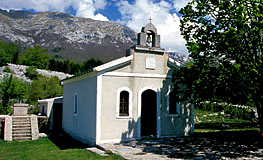 The lives of the local inhabitants of the Paklenica Riviera are deeply intertwined with the mountains. Velebit hides many villages where you can experience the magic of the native cuisine, and in some villages you can spend your entire vacation in
read more...
The lives of the local inhabitants of the Paklenica Riviera are deeply intertwined with the mountains. Velebit hides many villages where you can experience the magic of the native cuisine, and in some villages you can spend your entire vacation in
read more...
St Peter’s Church
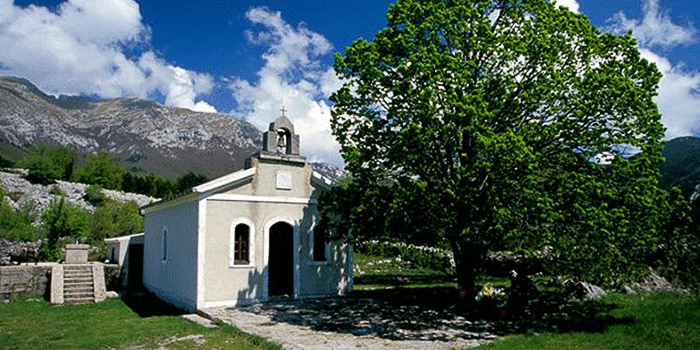
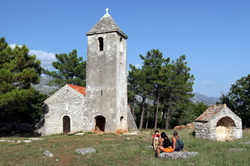 A medieval church situated on the Adriatic highway between Starigrad and Seline.
In the vicinity, there is a graveyard dating back to the mid-13th century.
Its eye-catching tombstones, made from hefty stone slabs, are still standing, sometimes
read more...
A medieval church situated on the Adriatic highway between Starigrad and Seline.
In the vicinity, there is a graveyard dating back to the mid-13th century.
Its eye-catching tombstones, made from hefty stone slabs, are still standing, sometimes
read more...
Ethno house Marasović
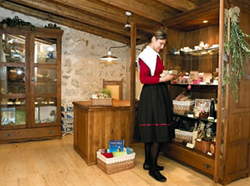 In ethno-house Marasović, there is a small exhibition of household furniture and agricultural tools, representing the long tradition, history, customs and beliefs of people from the Velebit area.
A small info-centre and souvenir shop is also in the
read more...
In ethno-house Marasović, there is a small exhibition of household furniture and agricultural tools, representing the long tradition, history, customs and beliefs of people from the Velebit area.
A small info-centre and souvenir shop is also in the
read more...
Argyruntum Roman glass
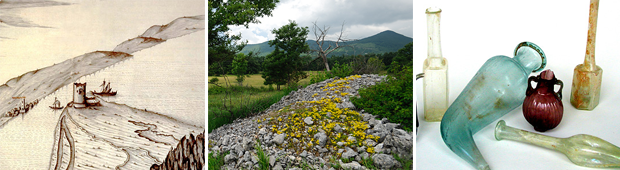
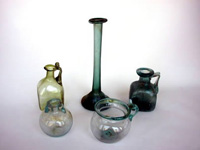 It is a poorly known fact that today’s Starigrad-Paklenica emerged from the foundations of the ancient Roman city of Argyruntum. However, in his work Naturalis historia, Pliny the Elder (Caius Plinius Secundus) included Argyruntum on the list of
read more...
It is a poorly known fact that today’s Starigrad-Paklenica emerged from the foundations of the ancient Roman city of Argyruntum. However, in his work Naturalis historia, Pliny the Elder (Caius Plinius Secundus) included Argyruntum on the list of
read more...
Mirila
 Mirila, stone monuments to the departed, can be found along the mountain paths, passes, elevations and clearings of Mt. Velebit. Mirila date from the times of the Velebit hamlets (17th–20th centuries), that mainly survived from animal husbandry.
read more...
Mirila, stone monuments to the departed, can be found along the mountain paths, passes, elevations and clearings of Mt. Velebit. Mirila date from the times of the Velebit hamlets (17th–20th centuries), that mainly survived from animal husbandry.
read more...
Short journey trough history
 Educational path
Mesolithic
Neolithic and Copper Age
Bronze Age and Iron Age
Classical Antiquity
Middle Ages and Modern Age
Educational Path
At a first glance, the maritime slope of Velebit range looks like a stone desert,
read more...
Educational path
Mesolithic
Neolithic and Copper Age
Bronze Age and Iron Age
Classical Antiquity
Middle Ages and Modern Age
Educational Path
At a first glance, the maritime slope of Velebit range looks like a stone desert,
read more...




One of the many legends about the bora , written in Zoranic " Mountains", the story of a young and beautiful but arrogant girl of noble birth named Bora...

 Which part of Croatia do you find most alluring for a summer holiday?